
%20(175%20%C3%97%20350%20px).png)
When I took the uniform off, I lost my pride.
I do not mean that in a negative way. I do not mean that the military intentionally makes people arrogant, or that rank automatically makes someone think too highly of themselves.
What I mean is that when you spend years in an environment where people depend on you, come to you with their problems, expect you to make decisions, and trust you to lead, that role becomes part of how you experience yourself.
I left the Army for medical reasons after my deployments. By that point, I was a captain. I had spent years leading people, solving problems, briefing senior leaders, and working in environments where responsibility was never optional.
People came to me because they needed something resolved. I genuinely enjoyed that part of leadership. In many ways, it is part of what eventually brought me into coaching.
Suddenly, nobody had to listen to me.
Nobody cared what rank I had held. Nobody was waiting for me to make the decision. Nobody automatically saw the uniform, the position, or the responsibility that had once communicated something about who I was before I even opened my mouth.
That can be a very humbling experience.
It also forces you to confront a much deeper question:
Who am I when none of those external things are telling me who I am anymore?
The military gives you much more than employment.
It gives you structure.
It gives you purpose.
It gives you a team.
It gives you responsibility.
It gives you standards.
It gives you a routine you did not have to create yourself.
It gives you belonging simply by participating in the organization.
For much of my career, success was fairly straightforward. Be at the right place, at the right time, prepared to do the right thing. Standards were written down. Expectations were usually clear.
The mission came first.
Then you leave, and all of those things suddenly become your responsibility.
As a civilian, I do not automatically have authority because of the position I hold. My routine only exists if I create one. My structure only benefits me if I build it. My responsibility begins with myself.
Even purpose changes.
In the military, purpose is often assigned to you. Outside of it, you have to discover what purpose actually means for you.
That freedom sounds wonderful, and eventually I discovered that it is. But in the beginning, freedom can feel a lot like uncertainty.
The Army is, in many ways, black and white. Civilian life can feel incredibly gray.
When you are used to being responsible for other people, it becomes very easy to confuse the role with the person.
If people respect you, seek your advice, and rely on your decisions for years, you can begin deriving a certain amount of your value from that relationship.
Then one day the structure disappears.
You may find yourself asking:
Who am I if nobody needs my opinion?
Who am I if nobody has to follow me?
Where does my value come from now?
Where am I supposed to go next?
For me, that forced the focus to move from the external world to the internal one.
If you have never spent much time working on your internal world, that can be uncomfortable.
A few years after leaving the military, I found myself volunteering at a meditation center, where I washed dishes, worked in the kitchen, painted bathrooms, and did whatever needed to be done.
These were things nobody would have associated with the image of an Army officer briefing generals or serving as an aide-de-camp.
Which is exactly why it was valuable.
It showed me how much my ego could get in the way of simply being a good person to the people around me.
Nobody cared that I had been a captain.
They cared that I could do my role so that people would have a clean plate to eat from.
The dishes still needed to be washed.
I realized something important when the external validation disappeared.
The things that had made me successful in the Army had not disappeared.
I had simply misunderstood where they came from.
My ability to stay calm under pressure was mine.
My ability to adapt was mine.
My ability to make decisions was mine.
My sense of responsibility was mine.
My ability to understand people was mine.
The uniform gave me an environment in which those qualities could be exercised, but the uniform did not create them.
That distinction became incredibly important for me.
There is a difference between what you did in the military and what you learned about yourself in the military.
What you did was the execution.
What you learned is where the value lives.
Maybe the military showed you that you can function under pressure. Maybe you discovered that you can adapt to an environment you never imagined yourself surviving. Maybe you learned how to solve complicated problems with incomplete information. Maybe you discovered that you can understand people, build teams, communicate clearly, or keep moving when things do not go according to plan.
Those things belong to you.
You get to take them with you.
One of the biggest reality checks for me came when I began applying for civilian jobs.
In the military, we are often told that veterans have incredible skills. We are told that employers should want someone with our experience.
Then you enter the civilian world and discover something important:
People hire people they want to work with.
Yes, competence matters.
Experience matters.
Discipline matters.
But so do collaboration, humility, communication, adaptability, and the ability to make the people around you better.
One mistake I have seen veterans make, and one I had to recognize myself, is assuming that civilians will automatically understand what military experience means.
Most people have never lived it. Their understanding of the military may come from movies, television, family stories, or brief interactions with veterans.
Talking constantly about rank, accomplishments, standards, or how things were done in the military can therefore have the opposite effect of what you intend. Instead of demonstrating competence, it can sometimes come across as arrogance or an inability to adapt.
Another mistake is expecting everyone around you to operate according to military standards. Keep your standards.
They can be one of the best things you take with you.
But understand that they are your standards.
The civilian workplace is not built on uniformity. Someone may work differently from you and still be incredibly effective. Someone may look relaxed compared with what you were accustomed to and still be excellent at their job.
Eventually, I came to believe that elevating the people around you is more important than forcing your standards onto them.
When you elevate people, many of them will exceed the standards anyway.
The first thing was pride.
Not pride in my service. I will always appreciate what that chapter gave me.
I mean the kind of pride that prevents you from becoming a beginner again.
The kind of pride that says, "I used to do important things. Why should I be doing this?"
That pride can stop you from discovering the person you are becoming.
The second thing I had to let go of was control.
In the military, we talk frequently about maintaining positive control. But outside of the military, I began realizing that what I actually needed was not control.
I needed preparation.
There is a major difference.
If your entire sense of safety depends on controlling the environment, then every unexpected change feels like something has gone wrong.
Preparation allows you to think differently.
The route becomes unavailable?
I have another route.
Something changes?
I adapt.
An opportunity disappears?
I look at what is actually available now.
Instead of trying to control the environment, I prepare for the environment to change. That lesson gave me an enormous amount of freedom.
I also stopped obsessing over results.
The military is extremely results-oriented because a mission is ultimately an outcome. You are given something that must happen, and your job is to find the resources and adaptability necessary to make it happen.
Civilian life has taught me to focus much more on the process.
I know the direction I am moving.
I know the skills I have.
I know I can adapt when something changes.
Therefore, I do the work and allow the result to reveal itself.
Sometimes the result is better than the one I originally wanted.
I do not believe the answer is to recreate the Army around yourself.
The goal is not to build another rigid system that tells you exactly who to be.
The goal is to create building blocks that amplify who you already are.
I also do not like telling people that they need to become "the best version of themselves." You already are yourself.
The work is discovering how to amplify the parts of you that are useful, healthy, creative, compassionate, curious, and capable, while understanding the weaknesses that may be getting in your way.
For some people, structure means a strong daily routine.
I am not particularly routine-heavy myself, so I do not believe everyone needs the same system.
Physical movement matters. Relationships matter. Professional direction matters.
But one of the most important things I discovered was curiosity. Curiosity naturally creates learning.
You do not always need another book, podcast, certification, or person telling you what to do.
Sometimes you need to become curious again.
What am I interested in?
What have I never tried?
What happens if I go in this direction for a while?
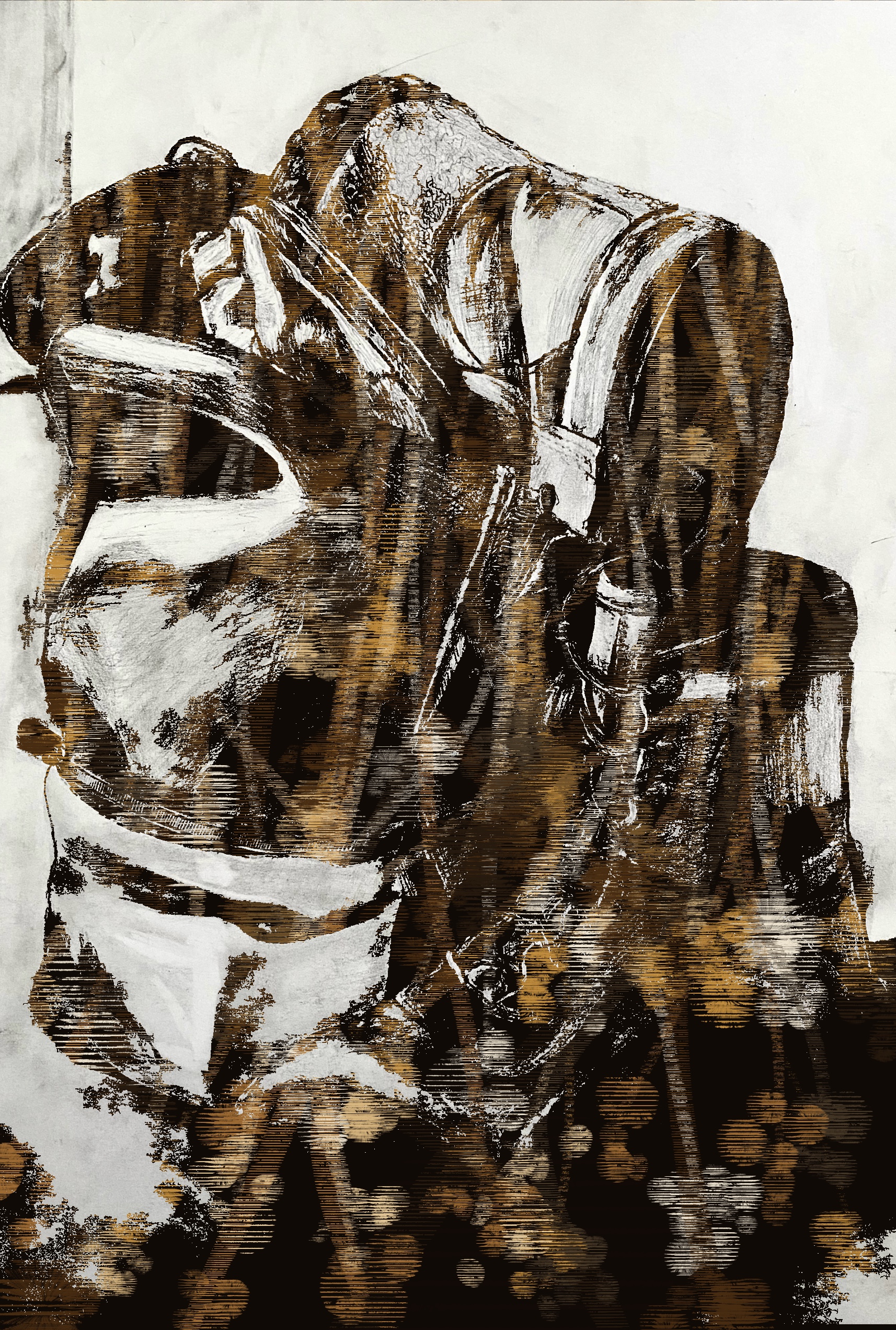
After leaving the military, I eventually became an artist.
I had never drawn or sketched in my life. Nowadays I paint as much as I can.
That chapter could not have been more different from the world I had come from, and that was part of what made it so meaningful.
I went back to school. I explored entrepreneurship. I traveled. I found new relationships with creativity, work, and learning.
Eventually, uncertainty stopped feeling like failure. It became discovery.
My meditation practice became one of the most important parts of rebuilding my relationship with myself.
For much of our lives, when something hurts, we externalize it.
We talk about it. We react to it.
Sometimes we transfer our frustration or suffering onto the people around us without even realizing what we are doing.
Quiet gave me somewhere else to go.
Not to avoid reality. To observe it.
Over time, I became less attached to titles, accomplishments, performance reviews, and the approval of other people.
I realized how attached I had been to being useful. To helping everyone. To being the person with the answer.
And when I started letting go of those attachments, I felt free and calm.
I no longer needed another person to validate me. I could validate myself.
And that changed my relationships because I stopped requiring other people to show up in a particular way just so I could be okay.
They could be themselves. I could be myself.
If a veteran sat across from me and said, "I have no idea what I want to do next," I would not immediately start throwing careers at them.
I would start with them.
What are you good at?
What experiences shaped you?
What do you actually enjoy?
What are you not good at?
What do you never want to do again?
What kinds of environments bring out the best in you?
Then we can look outward.
Where are these qualities valuable?
What environments need them?
What possibilities are worth exploring?
The first step is not finding the next title. The first step is understanding the person who will carry that title.
I understand why someone might feel that way.
Military service can contain experiences that are difficult to replicate anywhere else. The relationships, responsibility, intensity, sacrifice, and sense of mission can be profound.
But believing that the most important part of your life has already happened means you may not yet see what the next chapter can become.
You have an opportunity now that you may never have had before. You get to build a life around yourself. The military could never completely do that for you because the military was not designed around you.
Now you can decide what matters.
You can experience peace.
You can spend more time with family.
You can create.
You can build something.
You can learn something completely new.
You can succeed in a way that has nothing to do with rank.
You can change direction.
You can become curious again.
You can write the story however you want.
That freedom can be terrifying at first.
It can also become one of the most beautiful things that ever happens to you.
For me, one sign is that work stops being the center of everything.
Your career can still matter tremendously.
You can still be ambitious.
You can still want to succeed.
But the career becomes part of your life rather than the thing that proves your life has value.
You begin seeing yourself as the prize, rather than the thing you do.
That is when something changes.
You are no longer trying to replace the uniform with another uniform. You are building a life.
One of the things I value about coaching is perspective.
I sometimes think about the old story of several people who have been blind since birth and are asked to describe an elephant using only touch.
One person feels the trunk and describes something like a hose.
Another touches a leg and describes something like a tree.
Another touches the tail and describes the elephant as a brush.
Every person is telling the truth based on the part they can experience.
They just cannot see the entire picture.
That is how many of us experience our own lives.
We are not necessarily wrong.
We may simply be seeing one part of the elephant.
A good coaching relationship can create a space where you lay the cards on the table without judgment and explore perspectives you may not have considered.
The coach should not make your decisions for you.
The value is in helping you see more clearly so you can make better decisions.
The more perspective you have, the more intentionally you can choose what comes next.
When I took the uniform off, I lost my pride.
What I eventually realized I still had was my creativity and my passion for helping people.
If I could tell someone leaving the military one thing, it would be this:
The next step can be a wonderful one, even when it feels painful at first.
You do not have to erase your military experience.
You do not have to stop being proud of it.
You do not have to immediately know exactly who you are going to become.
Appreciate what that chapter gave you.
Take the lessons with you.
Then give yourself permission to discover everything the uniform never had the opportunity to show you.


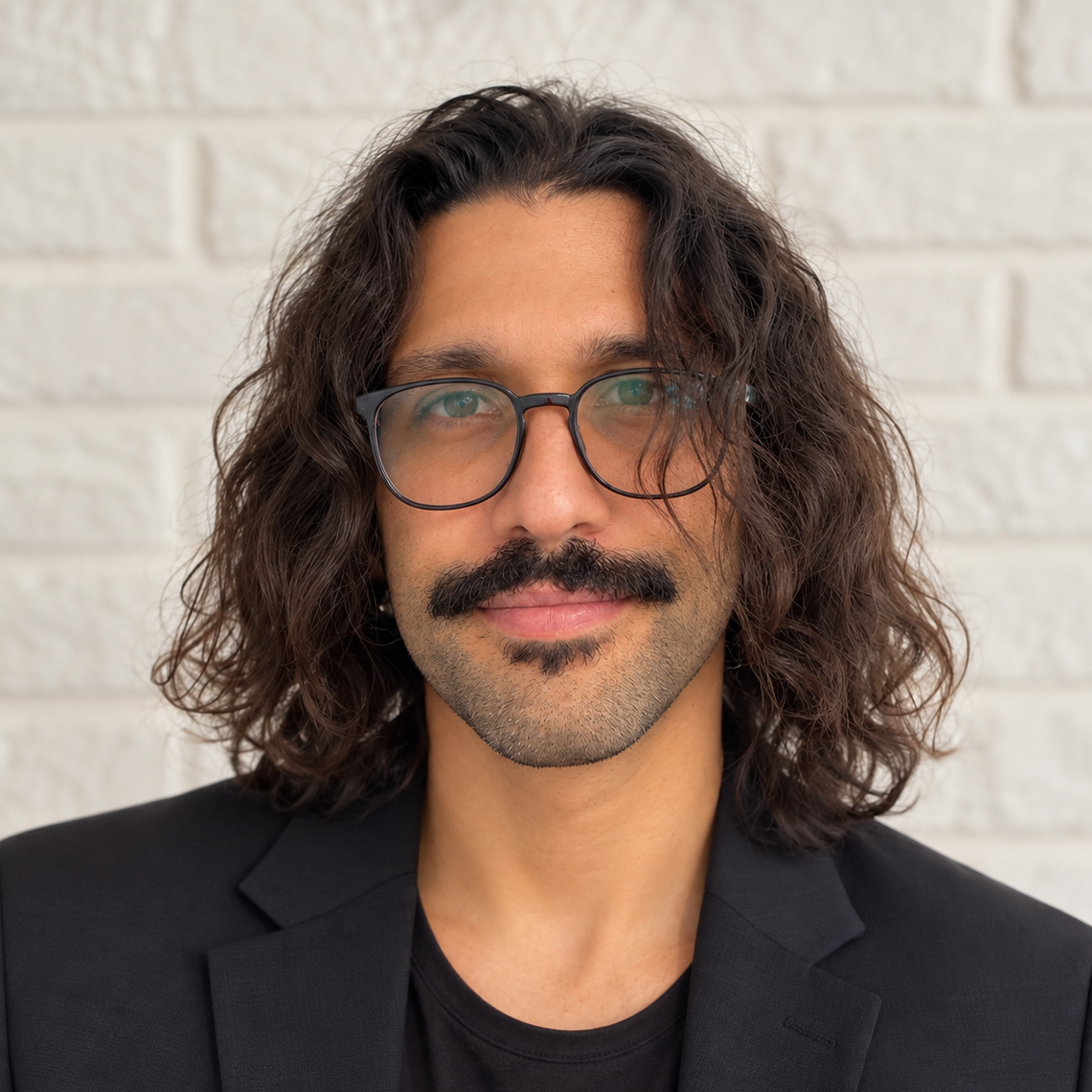
Frank Diaz is a coach and former U.S. Army officer who helps people navigate career transitions, leadership challenges, difficult decisions, and major life changes. Drawing on more than a decade of military service, his own transition to civilian life, and his meditation practice, Frank brings an active, collaborative, and direct approach to coaching. He helps clients recognize their strengths, explore what matters to them, and identify practical next steps. His work focuses on nonclinical coaching.
Complete our free, confidential questionnaire to easily and quickly match with 3 personalized coaches or therapists.


